Genre generators can be used for
many things like simple entertainment, new ideas, or to find a common
convention between a certain essay, or comic, or maybe even a meme. In class we
have been learning about how important it is to learn conventions of a genre to
help be more successful when writing. Using a research essay, comic, and meme
generator we will be looking for the conventions that we were able to find in
each generator.
The first generator I used was
SciGen, a computer science research paper generator. With repetitive
generations I was quick to see the common patterns and conventions that make up
the paper. As I skimmed through the paper it was clear that the essay was very
structured. There were titles to describe what exactly they would talk about
like introduction, models, related works, and conclusions. These at first
glance already served to make up a convention- that SciGen research essays are
very structured and make each section easy to find. As I began reading multiple
generated essays I was able to notice that in the generation it was found necessary
to have an informational title that is able to describe the work as a whole
using one phrase. A section called the “abstract” then follows the title and
essentially states a brief claim that will be defended and proved throughout
the essay. As the essay tries to prove a point, the rhetoric is clearly that of
a first draft paper maintaining a formal tone and using vocabulary that at
least seems to sound and look smart (because I do not know what half the words
mean). To sum up some of conventions
included in the Computer Science papers that were generated are titled
paragraphs, a clear and informational title, formal tone, models and graphs to
go along with the results, and a conclusion.
Pandyland
was much different than SciGen because it was a comic generator and so the
conventions of course were much different. As I was looking at the different
comics that it was creating there was one thing that was very clear each comic
used very casual language and even sometimes used profanity and slang. This
convention allows for comics to use a type of comedy like black humor. Another
convention that was used was dialogue and so it was easier to make a joke
through dialogue because the character often set him up at the beginning to be
funny at the end. Besides this comics ranged in conventions as they talked
about different things like politics, sex, social media, or just random topics.
The third
generator was a meme generator, which is typically a picture from a movie,
book, show, or some other entertainment showing for example someone making a
very clear facial expression that is then used to describe different situations
in which someone would make that exact face. Of course we know that even though
there could be hundreds of conventions in a genre not all have to be used in
each piece. In memes we found different conventions used for different memes.
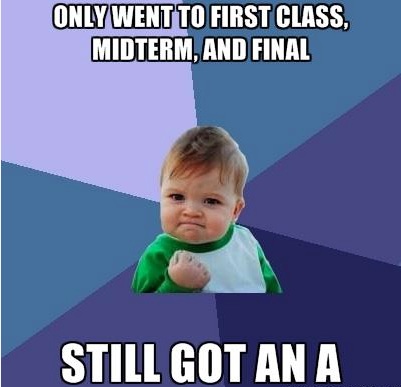
One convention would be the use of two phrases. For example there is a picture
of a baby holding his fist up almost in celebration and the top phrase reads
“only went to first class, midterm, and final” and the bottom
phrase read “still got an A”. Most memes are set up this way in which there is
a phrase and then the image and then the last phrase. It is set up this way
because the order in which someone usually looks at a picture is up to down.
Another convention that was used was the use of images. The images themselves
almost all came from a very popular source like Charlie and the Chocolate
Factory, Game of Thrones, NBA games, Rap Concerts, or a normal person making a
name for them by taking a super funny picture.
In essence,
each genre generator consisted of conventions that consistently came up. The
reason why they consistently came up because these generators realized that to
make something fit successfully in a genre SOME conventions need to be
included. However, we also did see how there were some comics and memes that
took it upon themselves to be unique and did not use as much conventions often
making up their on scheme for a meme or comic.

Moises,
ReplyDeleteYou… like the Cowboys? Oh boy… it’s gonna be a long quarter. ☺
This was a very interesting point you made on your Thlog#1: “I never knew what grade I would get because when I thought I had just turned in a soon to be New York Times best seller I would come back home with some mediocre grade and when I wrote a piece of writing that I thought I did awfully poor in I end up with the best grade I have ever gotten on a paper.” Isn’t that weird? That’s part of the reason why slapping grades on everything in school is problematic. Hopefully in this course you’ll be able to find a balance between those two—i.e., what make YOU THINK you’re submitting something that great and what the school/system typically values.
Re: PB1A, rhymes, complementary images, hands-on/pop-uppiness, and repetition are all conventions of children’s books. Some others that come to mind are lots of imagery and the “personification” of animals/nature. Why is all this stuff there? Well, it comes down to audience—it appeals to the youngins!
Re: PB1B, great comment right here—“The reason why they consistently came up because these generators realized that to make something fit successfully in a genre SOME conventions need to be included.” Yep, that’s exactly why we’re calling them conventions. When you’re analyzing genres, make sure you’re looking as close as possible at all the conventions. For insance, for memes, there’s always a setup and a punchline (top comment and bottom comment). Very solid work, though; I’m happy with this, Moises.
Z
PS: You’ll get more comments on your blog posts if you post them earlier on (i.e., not the morning of class). That isn’t a mandatory requirement; I just wanted to point it out.
Good job on your PB! I like your writing because it is very clear and well thought-out, I feel like every sentence you put down has a relevance to your argument. Your analysis of the comic generator was great- I would have liked to have read more! I liked what you said when discussing the memes, and they are set up text-image-text because that is the order in which people normally look at pictures. Good job in dissecting this genre; it is simple conventions and details like that that we do not really think about, but they are nevertheless significant.
ReplyDeleteGreat job on your pb1b! I thought you did a thorough job analyzing the genres that we were given, and liked how you touched on many different types of conventions. I totally agree with you about the structural aspects of the CS report generator. I believe that they primarily consisted of structural patterns and the formal style of writing. I also liked how you talked about the multiple conventions that the comic generator had. It's interesting how you can find patterns with content, style, and structure. Lastly, I thought that was really good that you talked about the sources that the memes came from. I didn't realize that until I read your pb1b so great job! I liked how you touched on that, the style of writing, and the structure. It's clear that you understand how to analyze these genres. Nice!
ReplyDeleteGreat job on your pb1b! I thought you did a thorough job analyzing the genres that we were given, and liked how you touched on many different types of conventions. I totally agree with you about the structural aspects of the CS report generator. I believe that they primarily consisted of structural patterns and the formal style of writing. I also liked how you talked about the multiple conventions that the comic generator had. It's interesting how you can find patterns with content, style, and structure. Lastly, I thought that was really good that you talked about the sources that the memes came from. I didn't realize that until I read your pb1b so great job! I liked how you touched on that, the style of writing, and the structure. It's clear that you understand how to analyze these genres. Nice!
ReplyDeleteGreat job on your pb1b! I thought you did a thorough job analyzing the genres that we were given, and liked how you touched on many different types of conventions. I totally agree with you about the structural aspects of the CS report generator. I believe that they primarily consisted of structural patterns and the formal style of writing. I also liked how you talked about the multiple conventions that the comic generator had. It's interesting how you can find patterns with content, style, and structure. Lastly, I thought that was really good that you talked about the sources that the memes came from. I didn't realize that until I read your pb1b so great job! I liked how you touched on that, the style of writing, and the structure. It's clear that you understand how to analyze these genres. Nice!
ReplyDelete